An Android game launcher for retro handhelds

All your games, one shelf.

Point Blip at the folder where your ROMs already live. Seconds later every system is on the shelf with real box art, achievements on the covers and one button back into last night’s game — on a screen with nothing on it that is not earning its place.

Download onGoogle PlayJoin the Discord

Free · No ads · Optional Pro

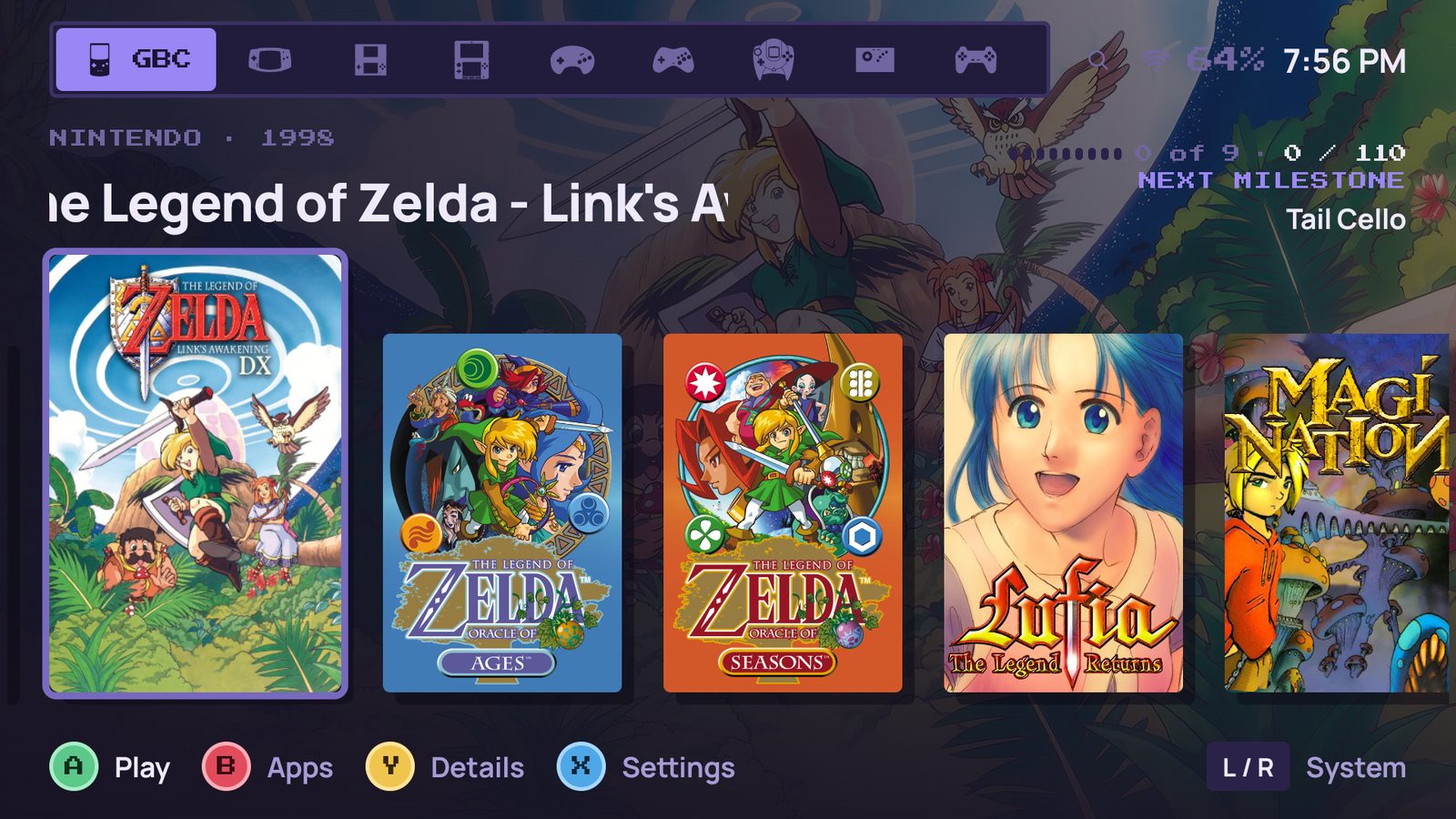
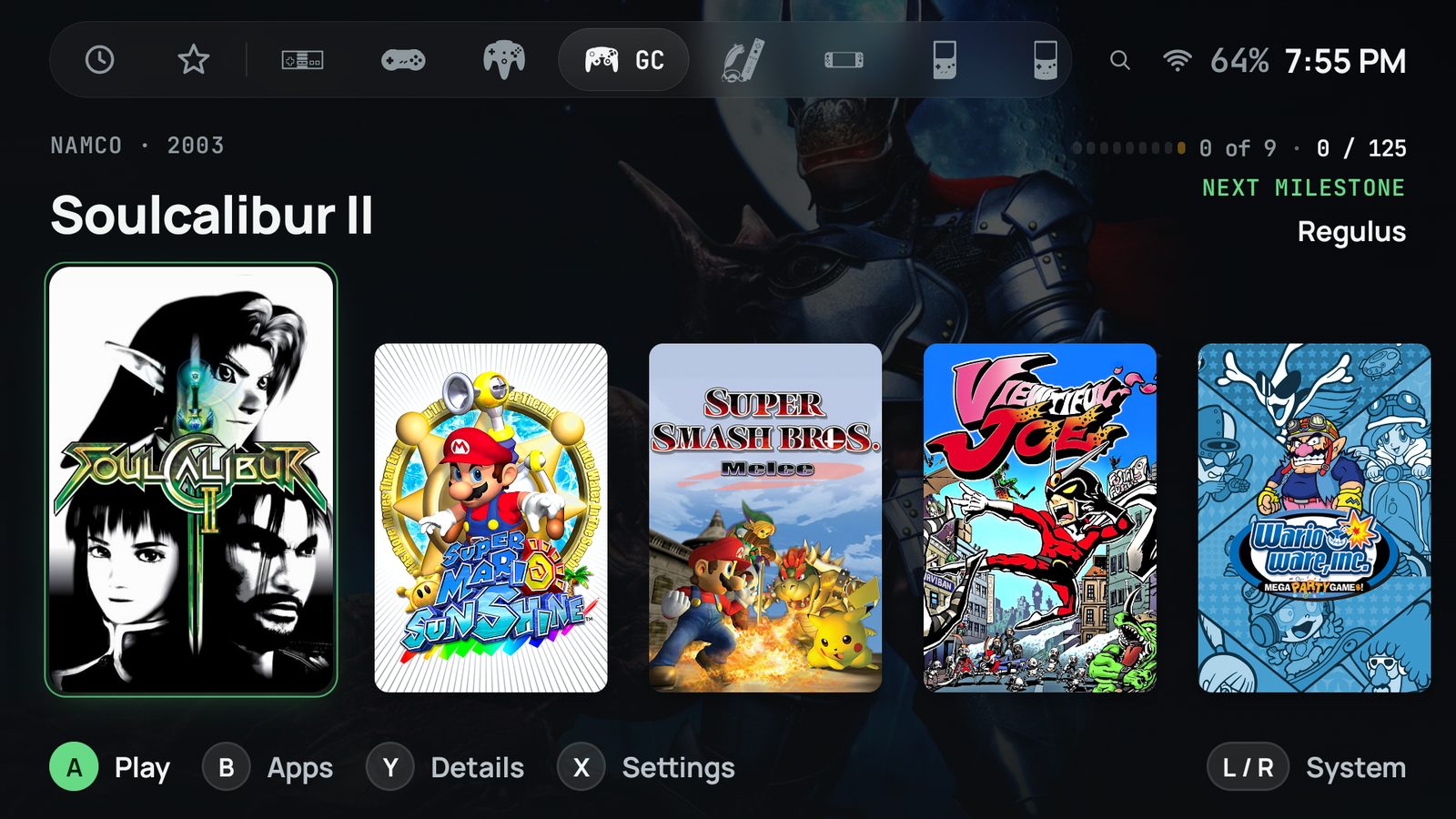
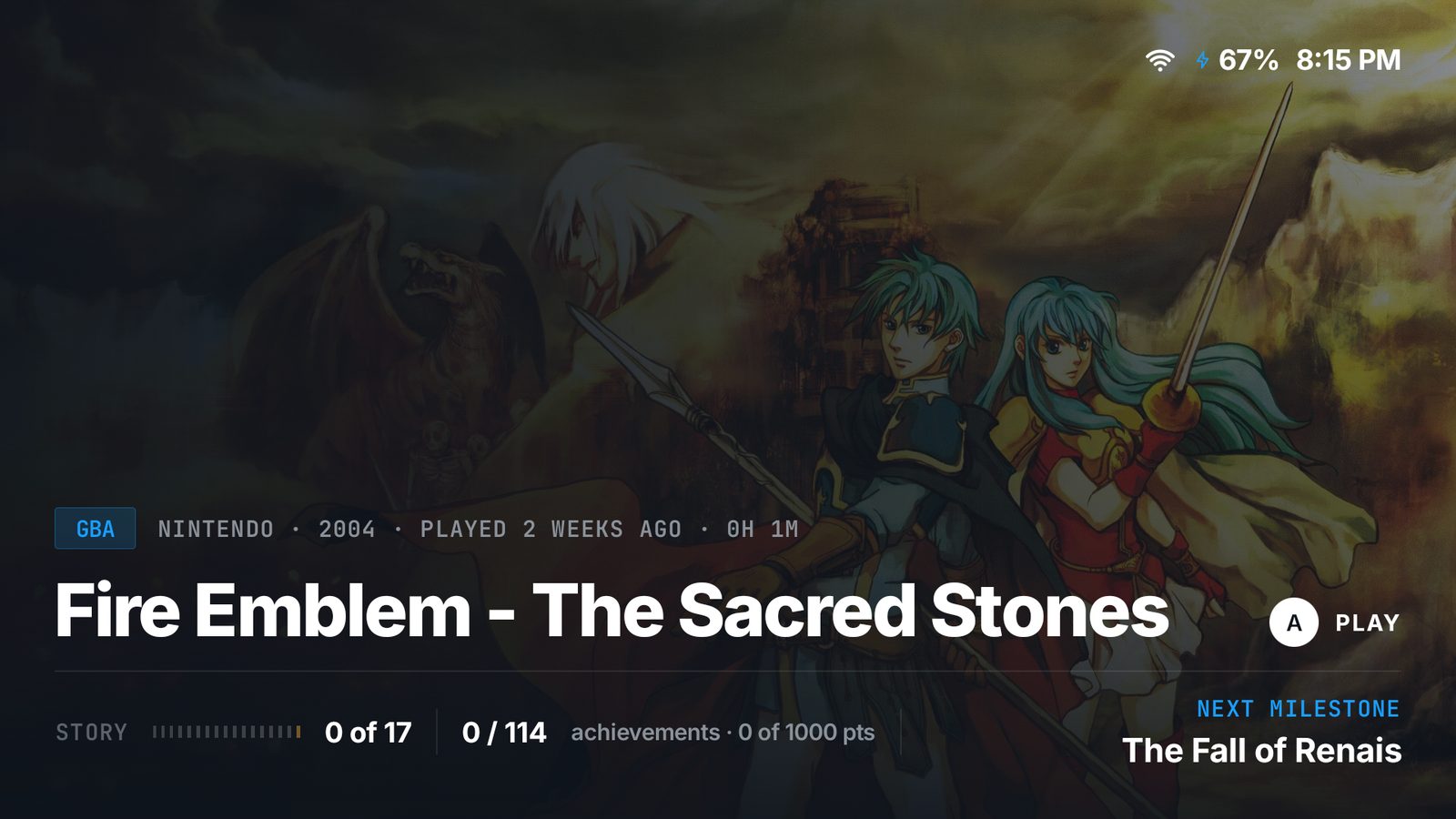
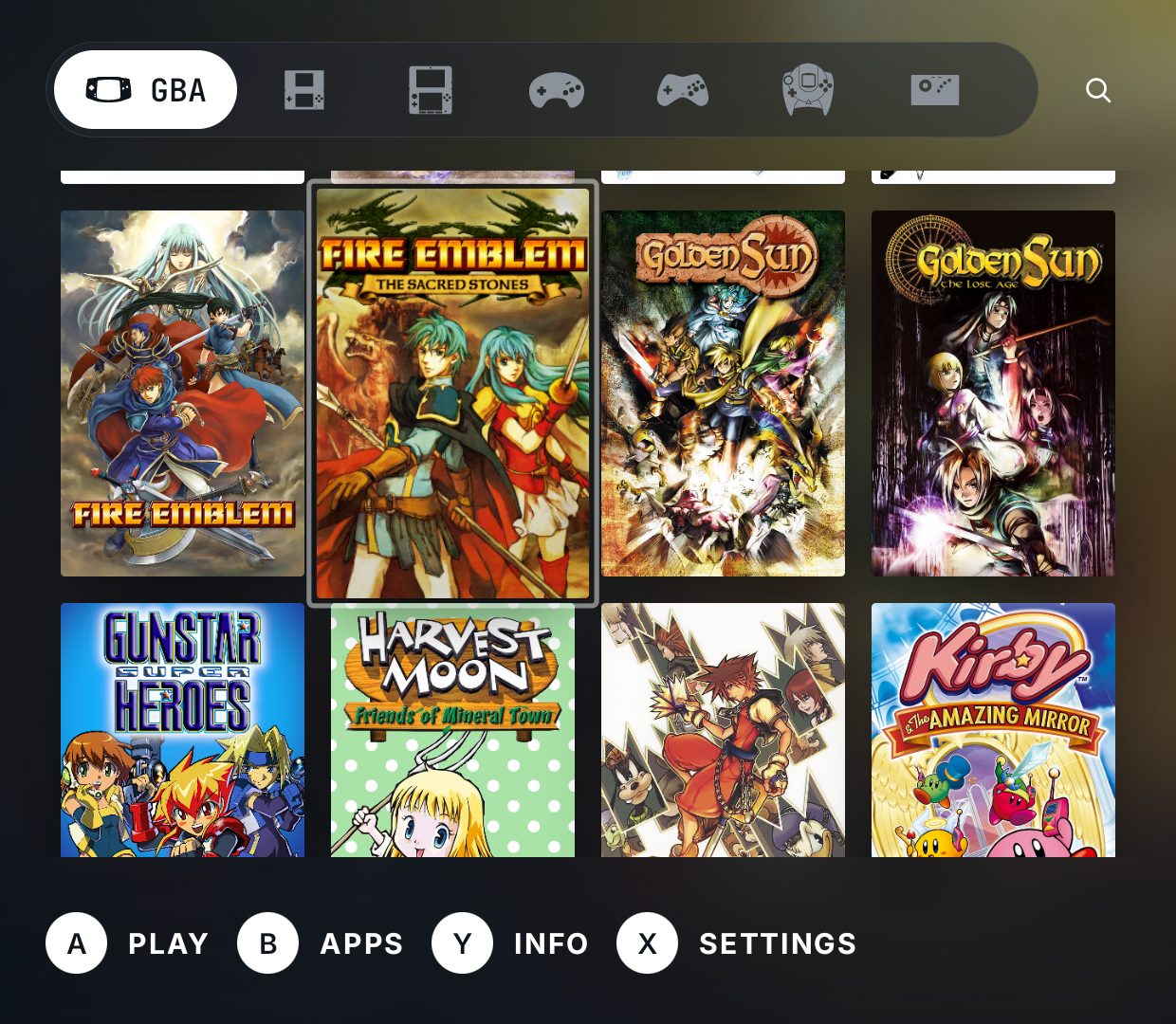
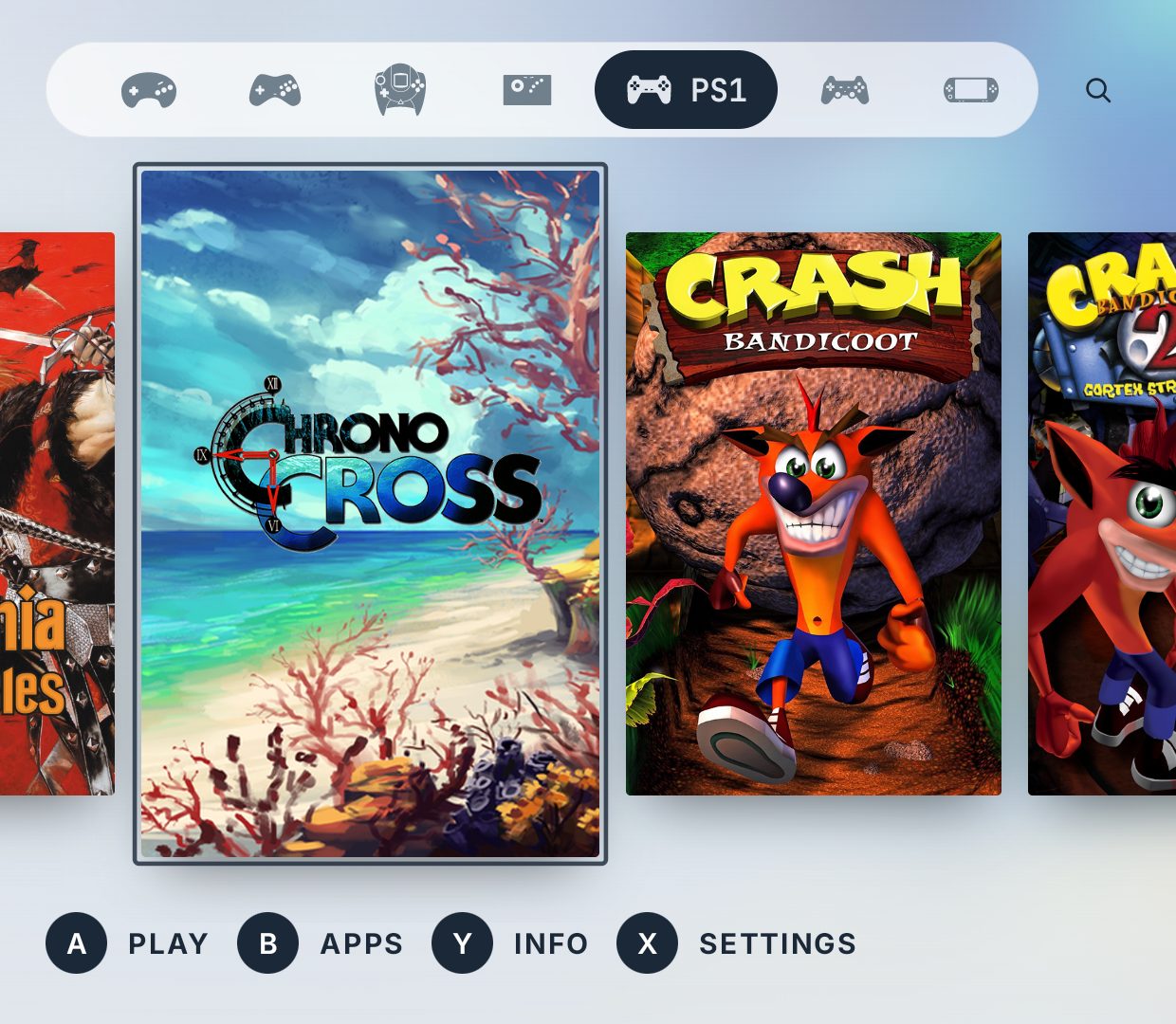
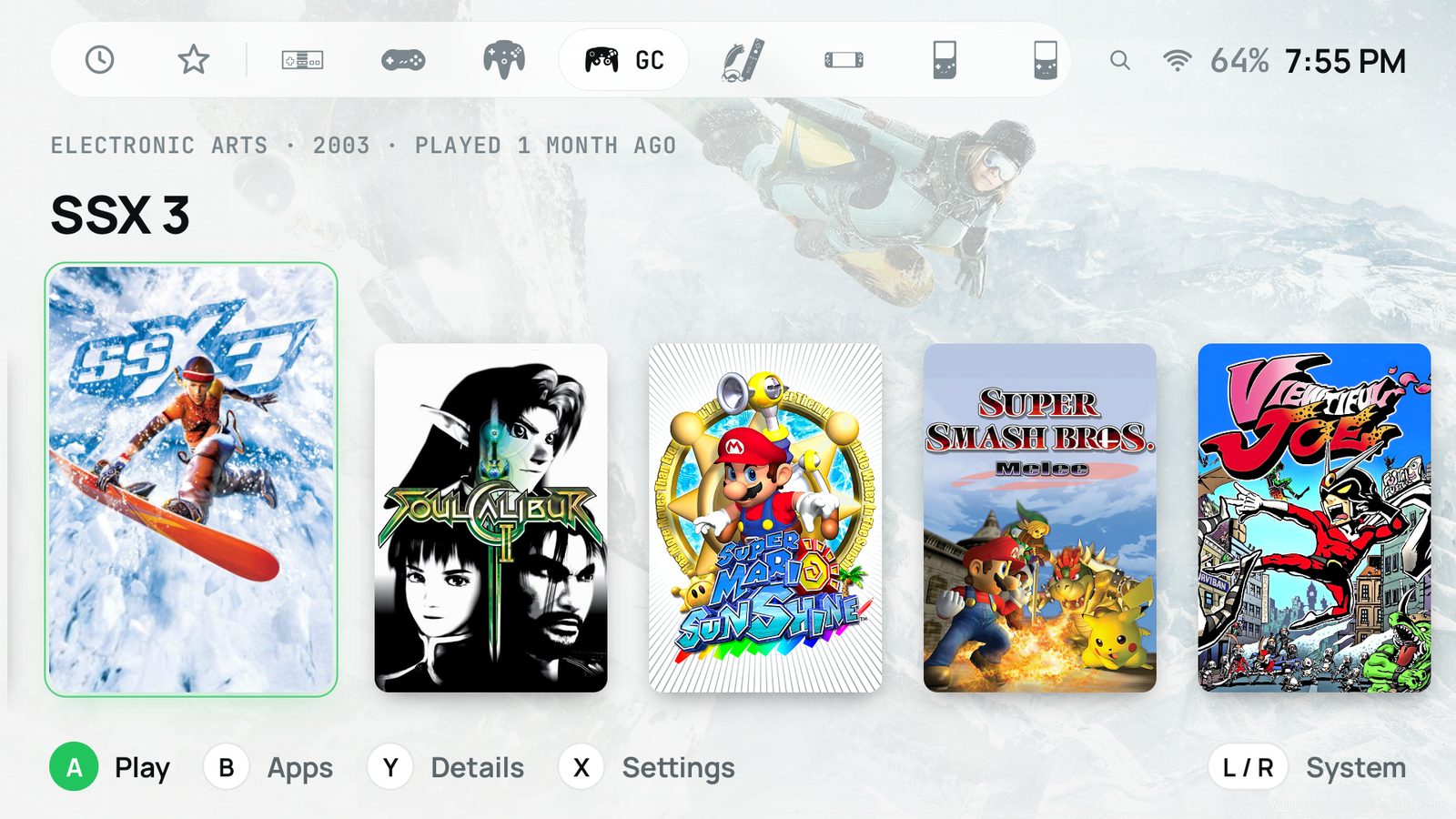
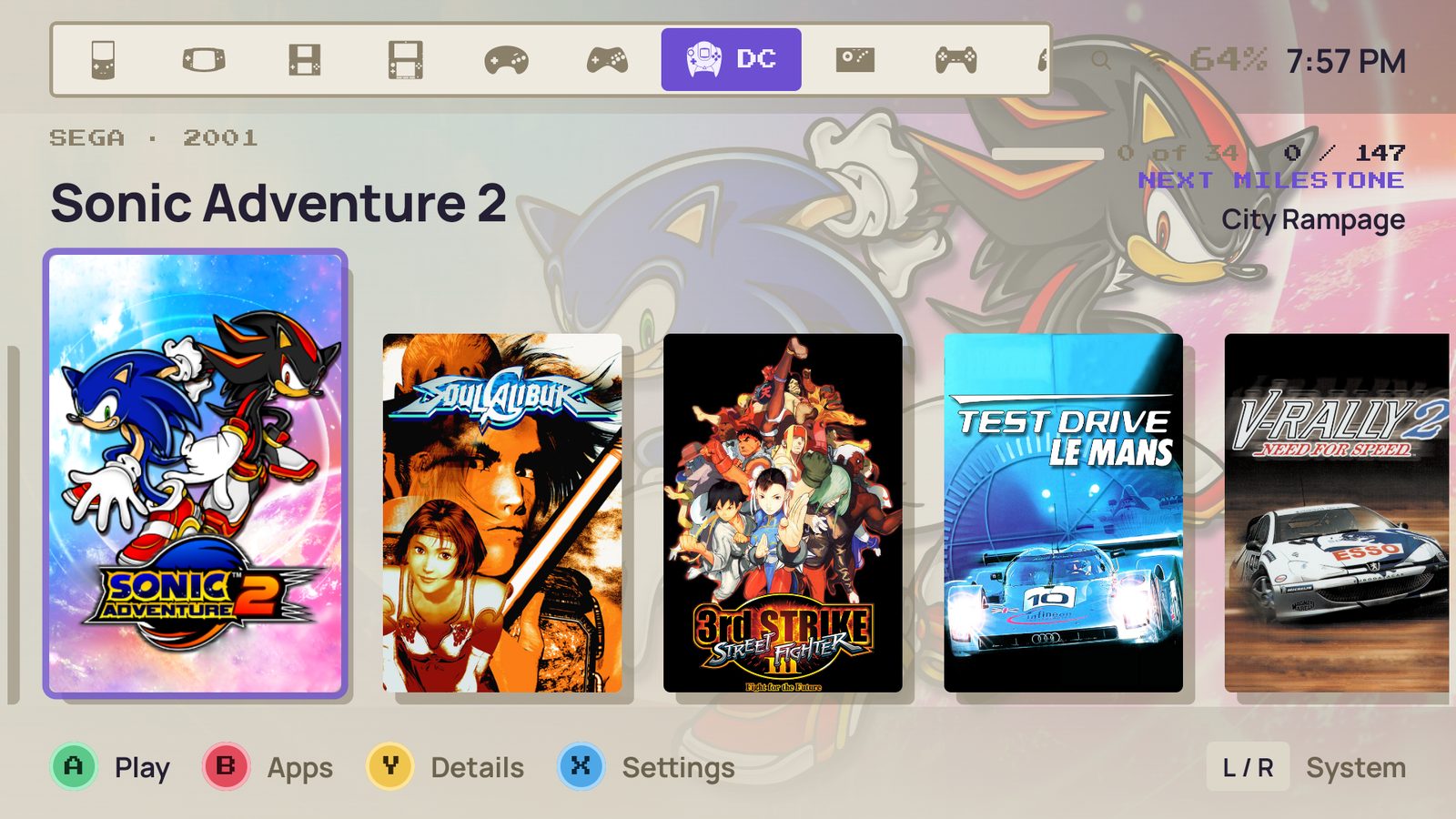
The shelf: a row of box art with one game focused, its publisher, year and achievement progress announced beside it, the platform tabs above and the pad legend along the foot
Every frame a real capture — no mockups, no renders.

How it works

A folder of ROMs in. A whole shelf out.

  1. 1

    Point at your ROMs

    One folder is enough — internal storage, SD card or USB drive. Blip reads what is inside and recognises every system it finds, by name or, when the name says nothing, by the files themselves.

  2. 2

    Check the table, import

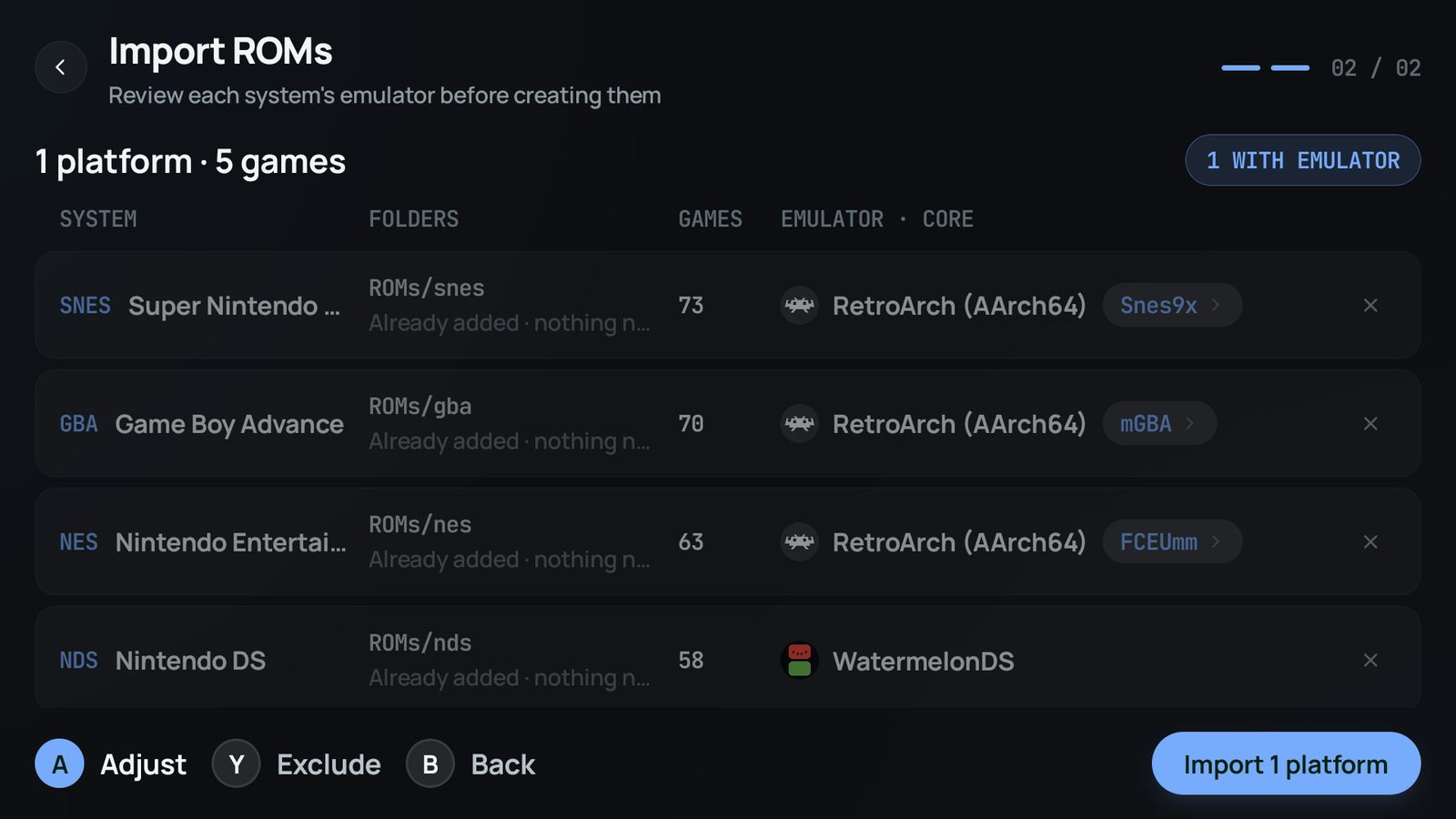
    Every system it found, with its folders, its game count and the emulator and core it suggests. Drop a row you do not want, change an emulator, create the lot in one pass.

  3. 3

    Pick up the pad

    The art turns up on its own while you browse. D-pad to move, A to play — and it opens on the game you left, so most nights you press one button and you are back in.

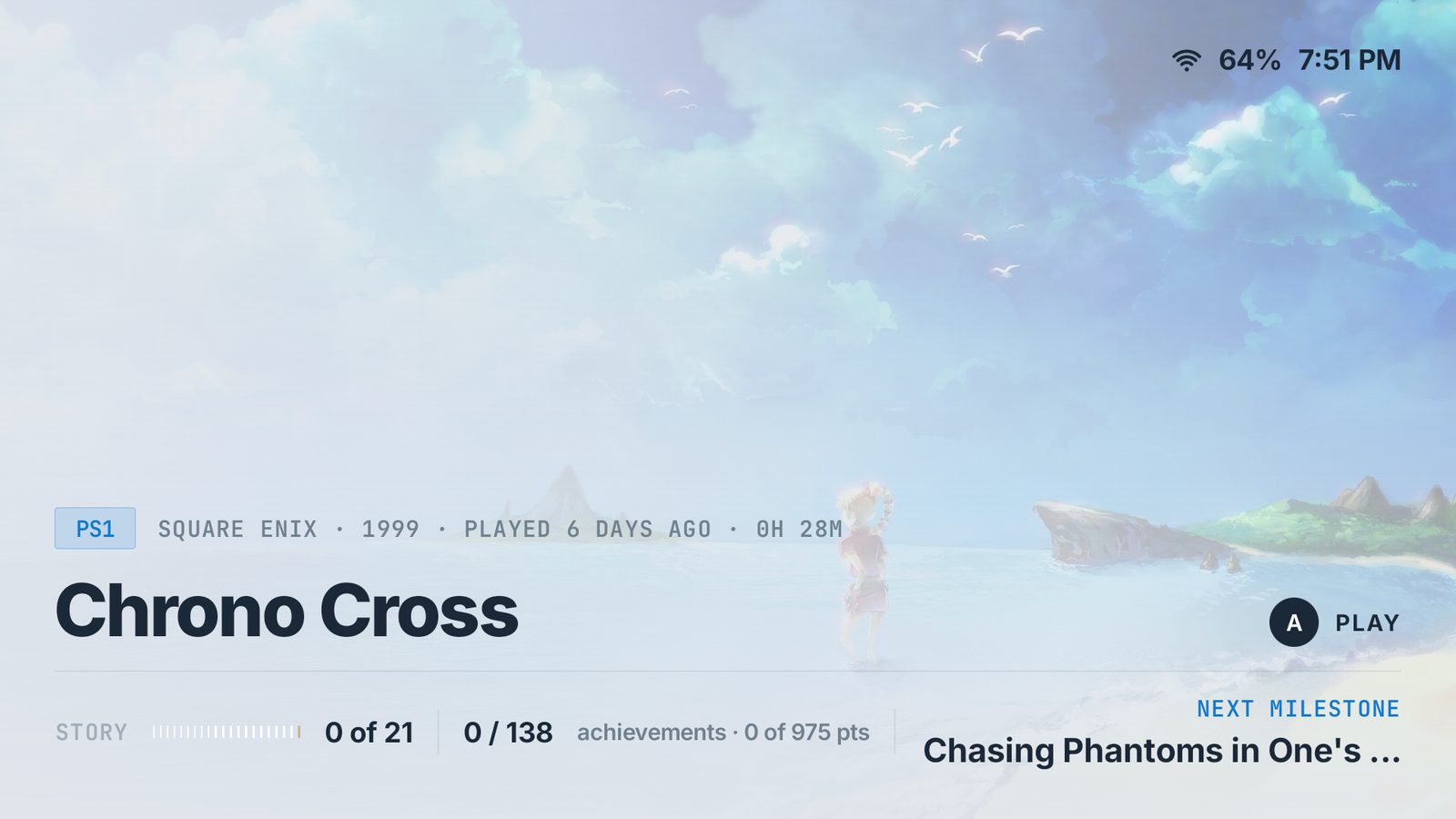
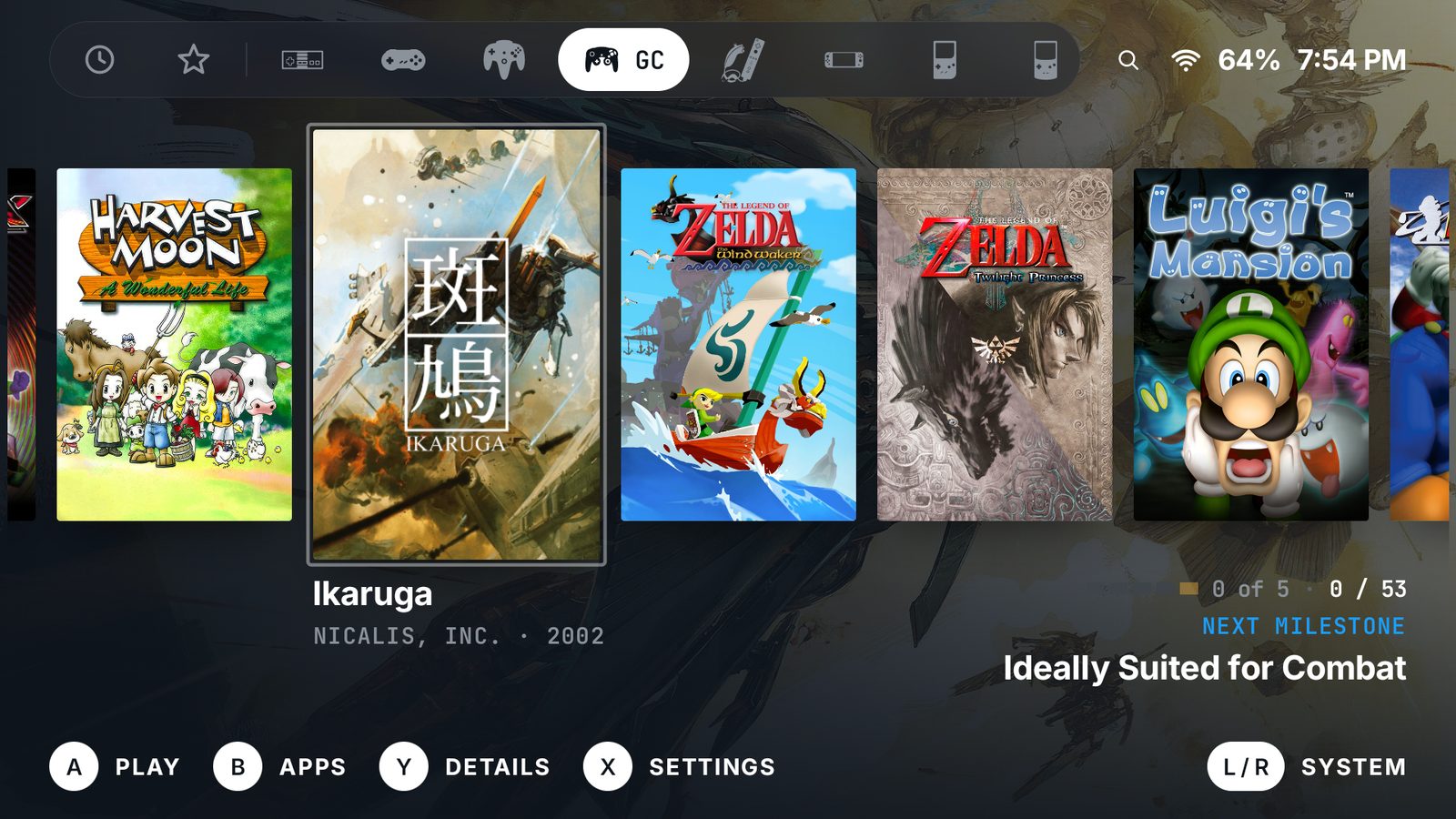
The shelf: one row of covers with the focused game named beneath it, its own art lighting the backdrop, the platform tabs above and the pad legend along the foot

Interface

Clean, polished, and the art gets the room.

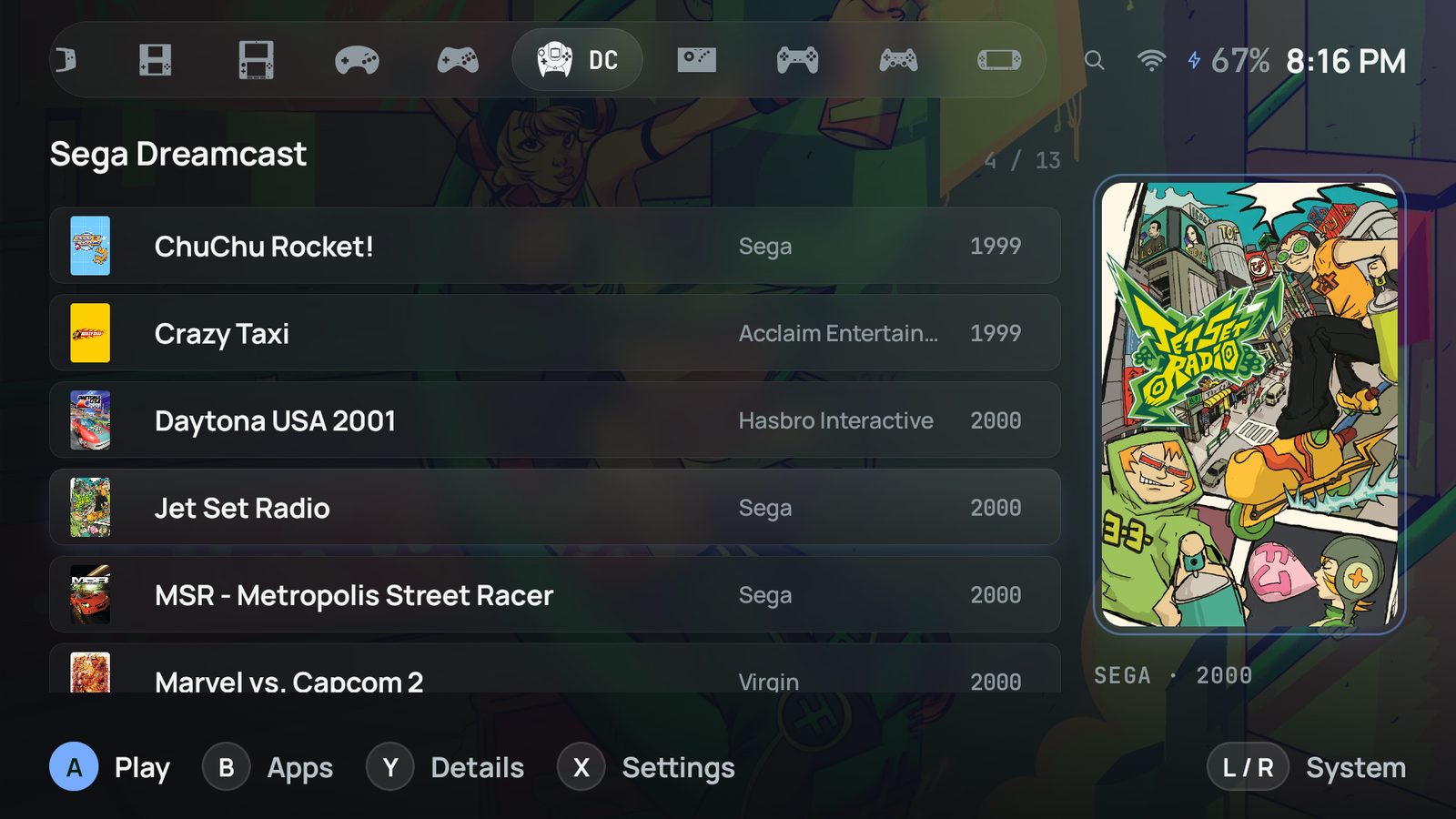
Drawn for Android, not ported to it. One row of covers, the game you are on named beneath them, its own art lighting the screen behind — and nothing else, because nothing else is earning its place. The same type and spacing carry across every screen, the transitions keep up with your thumb, and the shelf, the grid and the list are all the same library seen three ways.

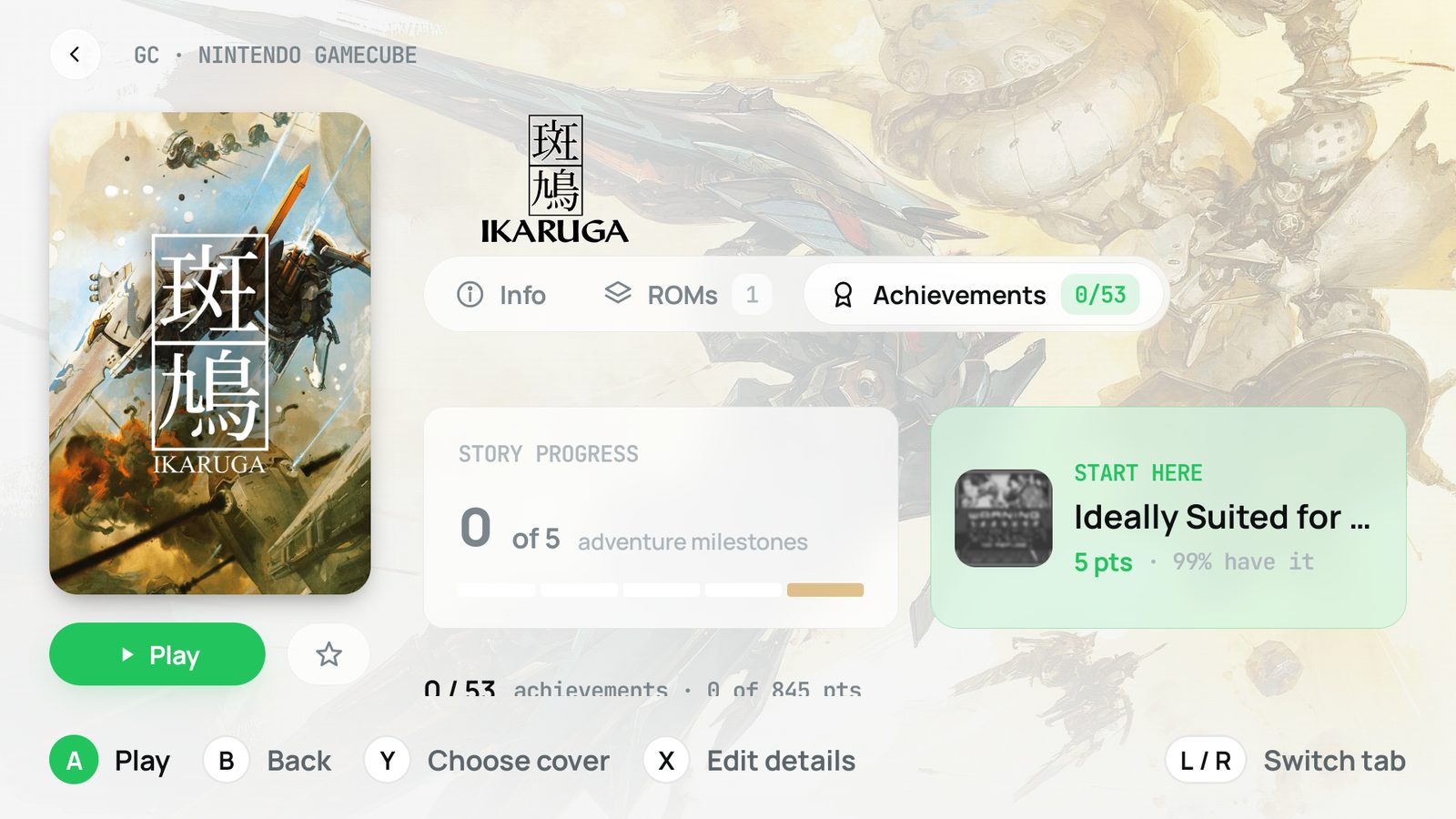
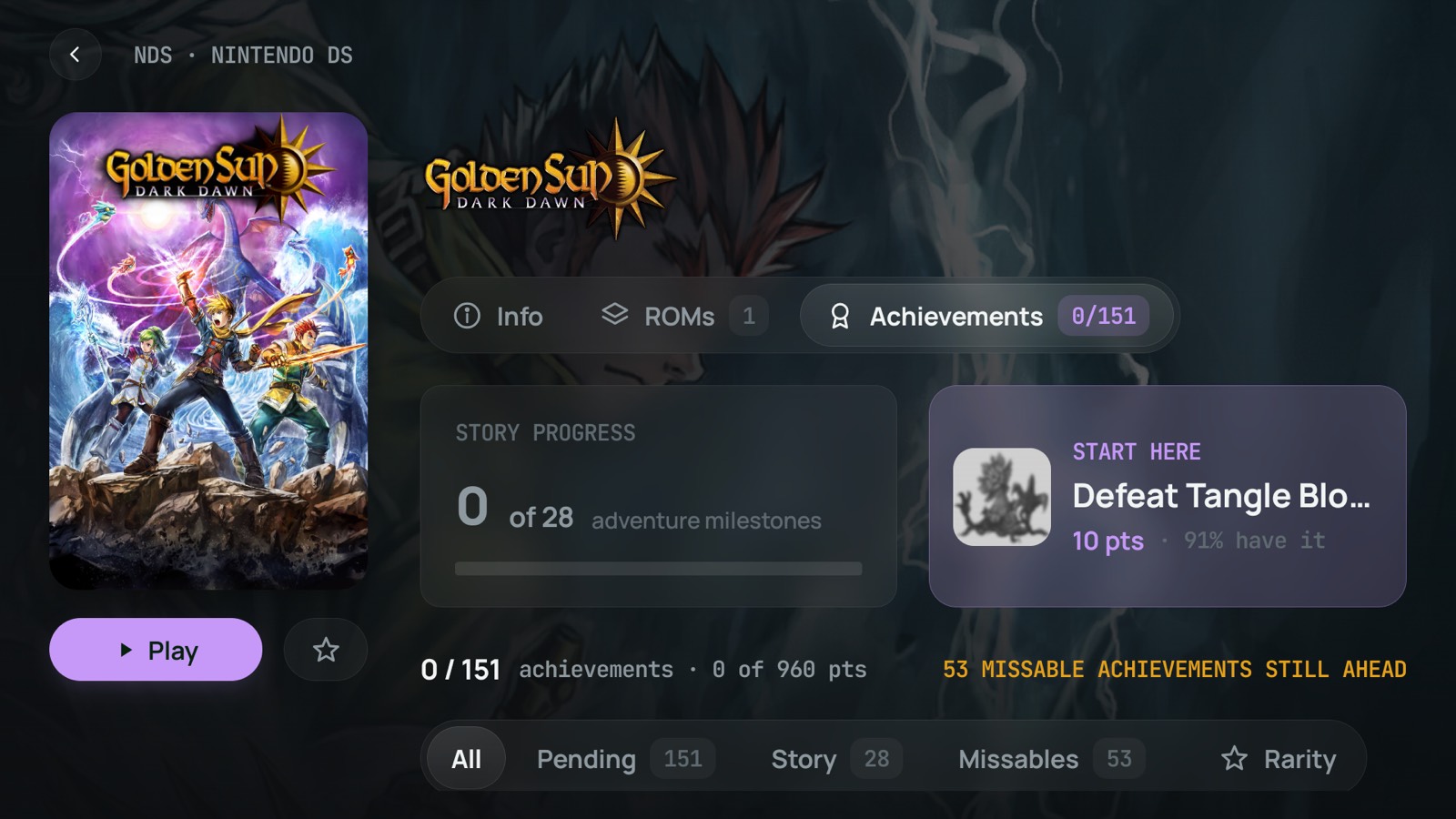
A game page on its Achievements tab: the game's own logo drawn in place of the title, story progress across 28 milestones, the achievement to start with with its points and rarity, an amber warning that 53 missable achievements are still ahead, and the filters for all, pending, story, missable and rarity

RetroAchievements

Trophies, woven through the whole app.

Connect your account and every game carries its standing wherever you meet it: progress on the cover while you browse, the next story milestone named on the shelf, and on the game’s page the full set — points, rarity, unlock dates, hardcore tags — with filters for what is pending, earned, story or missable. Story progress is the real one: the beaten path as milestone cells, where to start, and how many missables are still ahead. It keeps up with the account wherever you play, so unlocks, completion, time played and the games you picked up last arrive even from another device. Nothing is written back; the earning still happens in your emulator.

The social side — friends, comparisons, what everyone else is playing — is what we’re building next.

Dual screen

Two panels, one device.

On a dual-screen handheld — an AYN Thor, a Retroid Pocket Duo — Blip splits every screen by function and repeats nothing. The game you are looking at fills the panel you look at; the whole library sits under your thumb on the one you touch. Thirteen screens have their own arrangement, down to the cover picker and the editor, and whichever theme and layout you picked ride both panels — grid here, carousel beside it. Turn it off and the display goes back to the handheld’s own launcher rather than sitting there black.

The upper panel: the focused game's hero art filling the screen, its title, system and year, the Play prompt and the next story milestoneThe lower panel: the whole tab as a grid of covers with the cursor framing one, the platform tabs above and the pad legend below, all under your thumb
The same handheld in the light theme, its upper panel carrying the hero art and the Play promptIts lower panel in light: the same tabs, covers and pad legend on a pale ground

Game companion

The panel keeps working while you play.

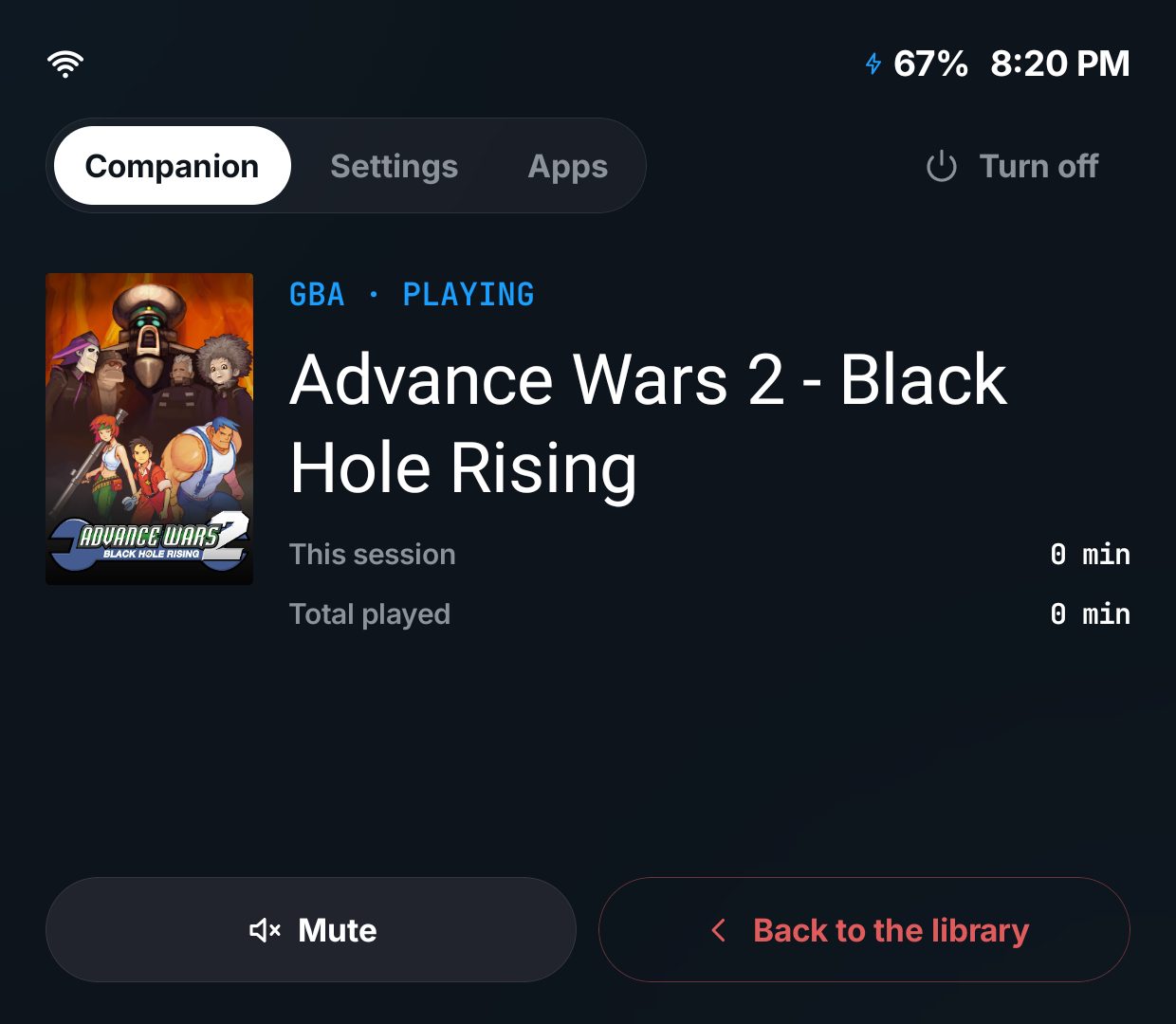
Behind a running game the lower panel stays black under your thumbs — it says the game’s name once at launch, then fades. Tap it and it wakes: what you are playing with this session’s time and the total, a settings tab with the brightness of both screens and the volume, and an app drawer that opens apps onto the panel so the game above is never covered — it carries on in its own emulator, untouched. One button brings the library back.

Achievements inside the companion are on the way.

The upper panel: the game itself, running in its own emulator, untouched by BlipThe panel below it, awake: the Companion, Settings and Apps tabs, the game's cover and title, this session's and the total play time, Mute and Back to the library
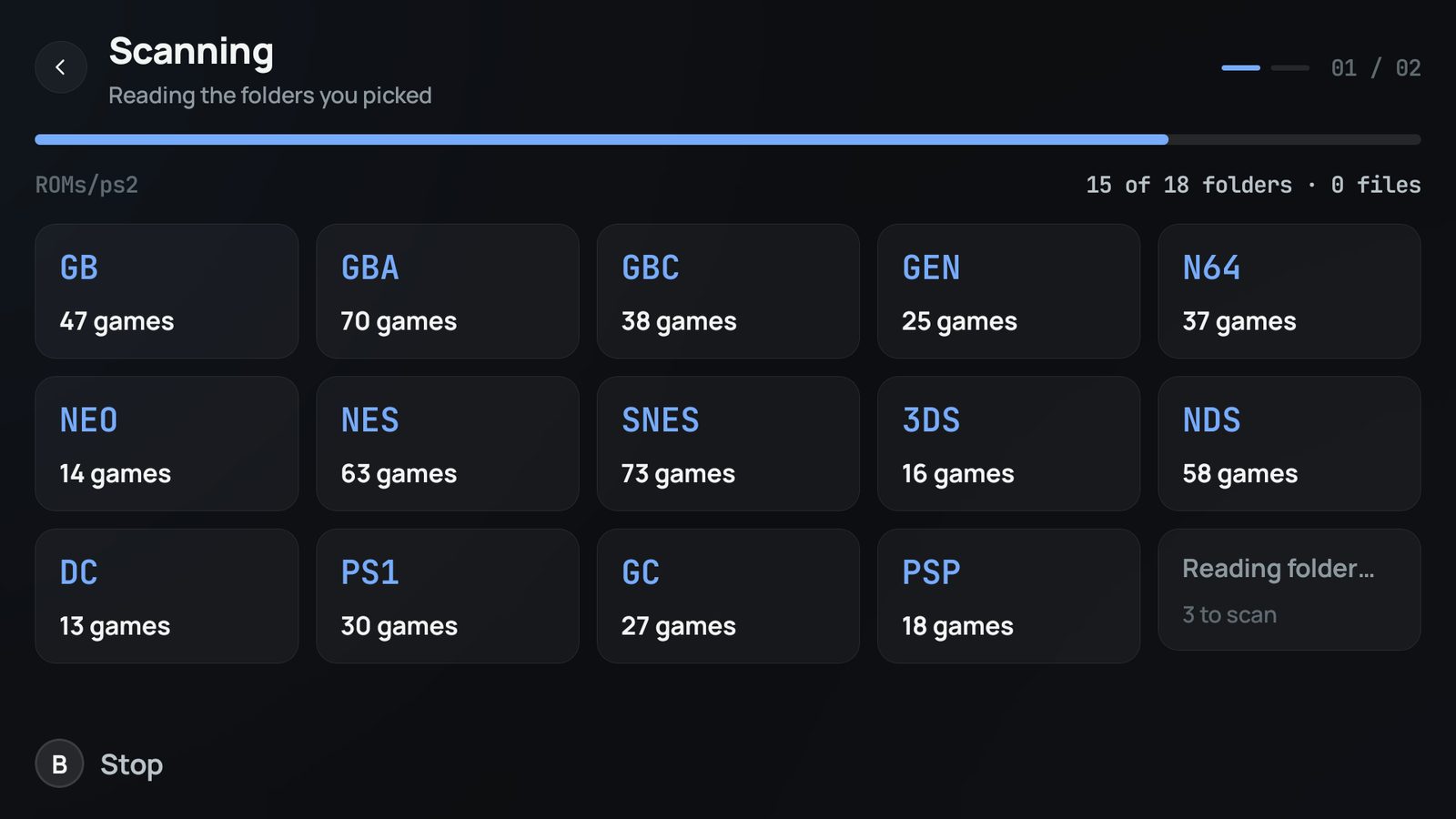
The scan in progress: a card per system as it lands — 73 games, 70 games, 63 games — while the folders are readThe review table: each system with its folders, its game count and the emulator and core suggested for it, every row excludable before anything is created

Importing

One folder. Your whole library.

No adding systems one at a time. Hand Blip the folder your games already live in and one scan finds every system inside it, counts the games and picks an emulator and a core for each. Regions, revisions and multi-disc sets collapse into one game; anything that was never a game is dropped. What comes back is a table you can read and change before a single platform is created. Re-scan months later and nothing is lost — your art, your favourites and your play dates stay with the game even when its title changes.

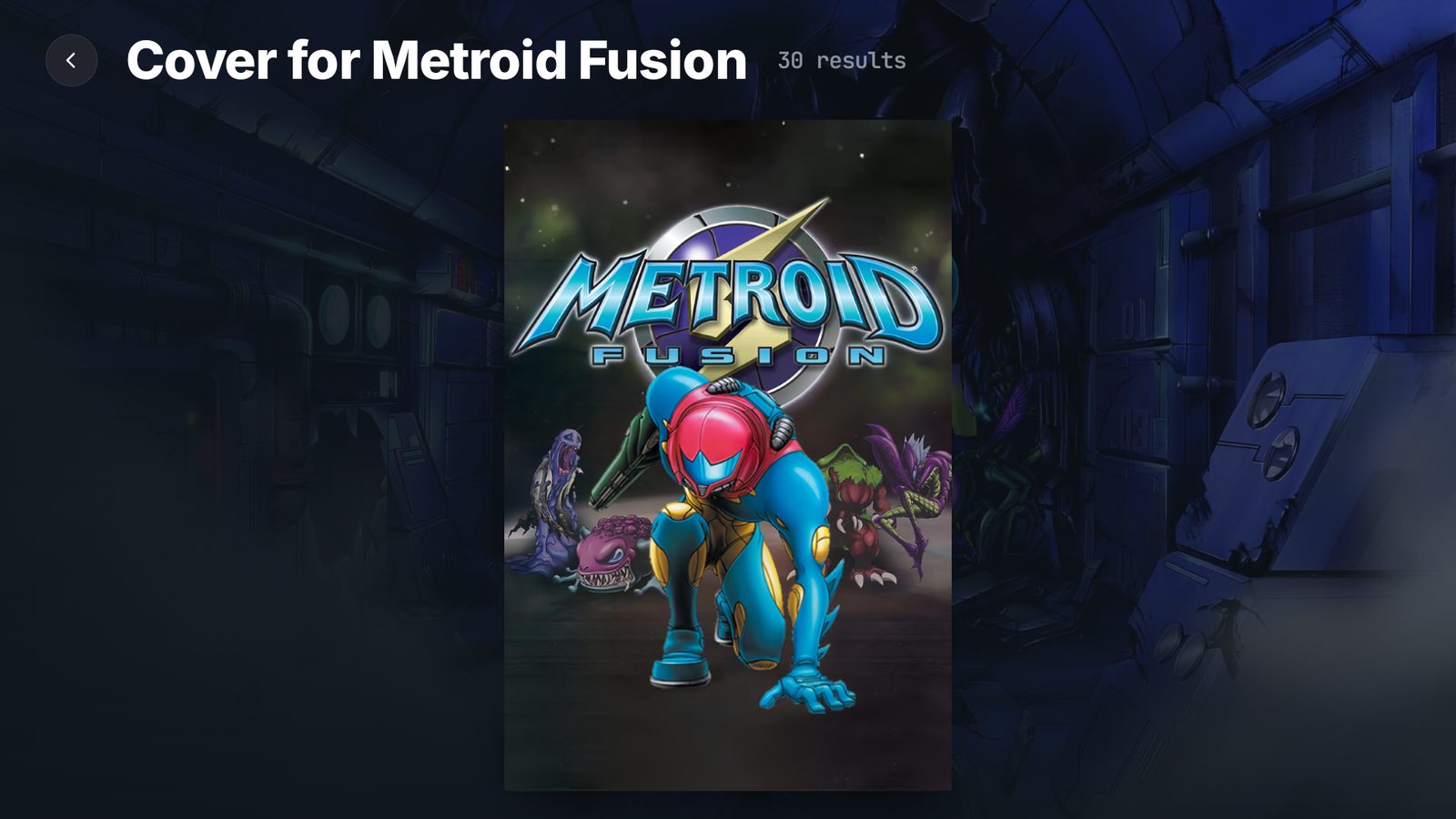
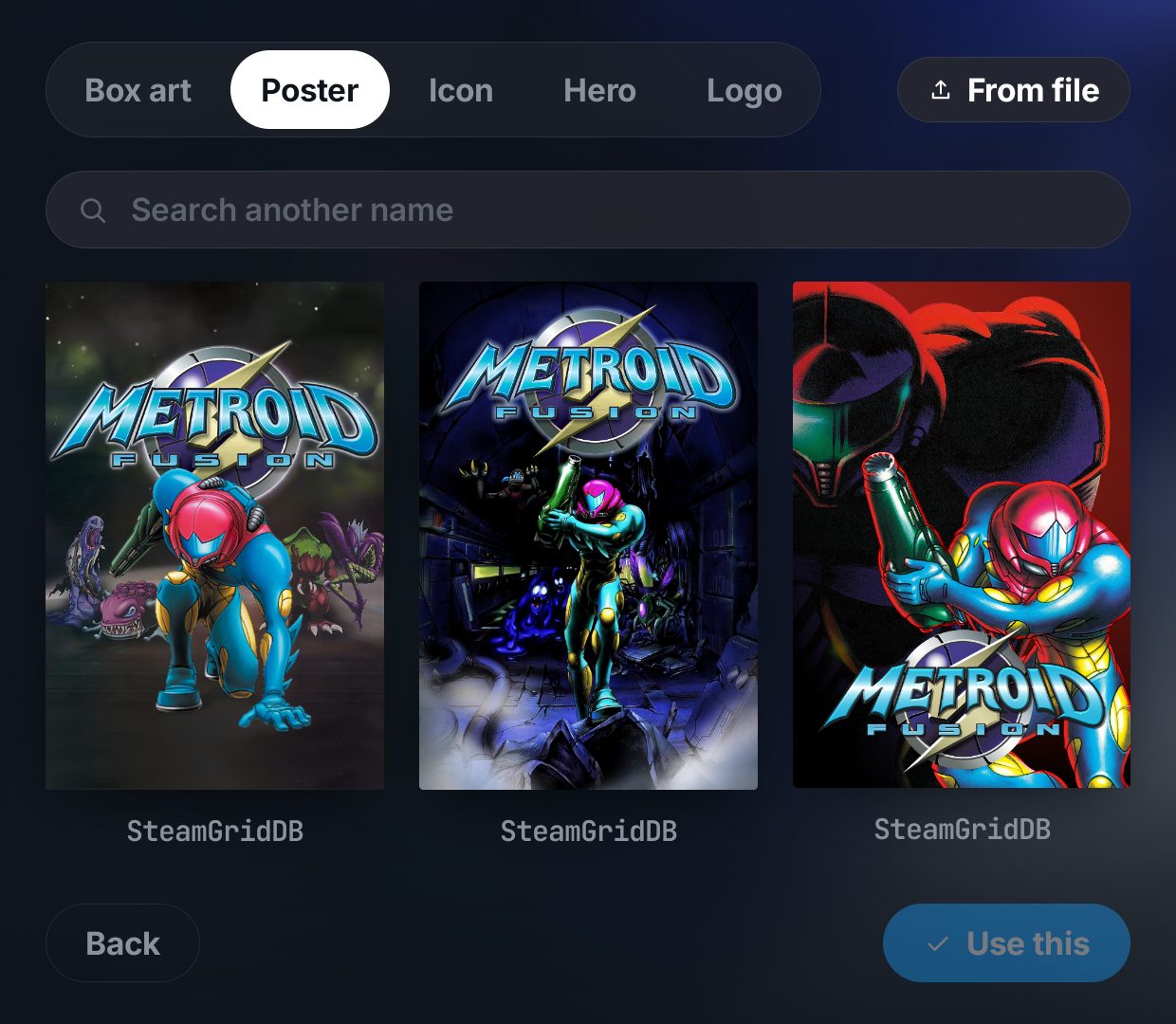
The cover picker on a dual-screen handheld: the candidate you are on shown large, headed Cover for Metroid Fusion, 30 resultsThe panel below it: tabs for box art, poster, icon, hero and logo, a field to search another name, and the candidates each labelled with the service it came from

Artwork

Box art that turns up on its own.

Covers, backgrounds, logos, icons and descriptions are fetched from several places at once — libretro thumbnails, PlayMatch, TheGamesDB, IGDB, ScreenScraper and SteamGridDB — and Blip weighs the answers and keeps the best one, so you never have to pick a provider and most libraries come out right the first time. Every keyless source is on by default; your own free ScreenScraper or SteamGridDB key only makes it better. Where it does miss, the picker puts every candidate in front of you — thirty of them here, each labelled with the service it came from — searches under another name, and takes an image straight off your device.

Themes

Make it yours.

A theme here is not a colour swap: colour, shape, typeface, surface and the sounds the interface makes all belong to it. The 16 bit one squares every corner and was built for the handhelds made to look like 1994 — run it on one and the shelf finally matches the shell in your hands. Deck goes slate on near-black blue with a selection that inverts what it picks. Every theme is free, each in light and dark, and more land with most releases.

The home screen in the default theme, dark: rounded panels, soft glow, art-lit backdrop
DefaultDark
The same home screen in the default theme, light: paper-white panels, the same layout
DefaultLight
The home screen in the 16 bit theme, dark: square corners, hard shadows and its own rail
16 bitDark
The home screen in the 16 bit theme, light: a warm off-white shell, same pixel lettering
16 bitLight

And then you keep going.

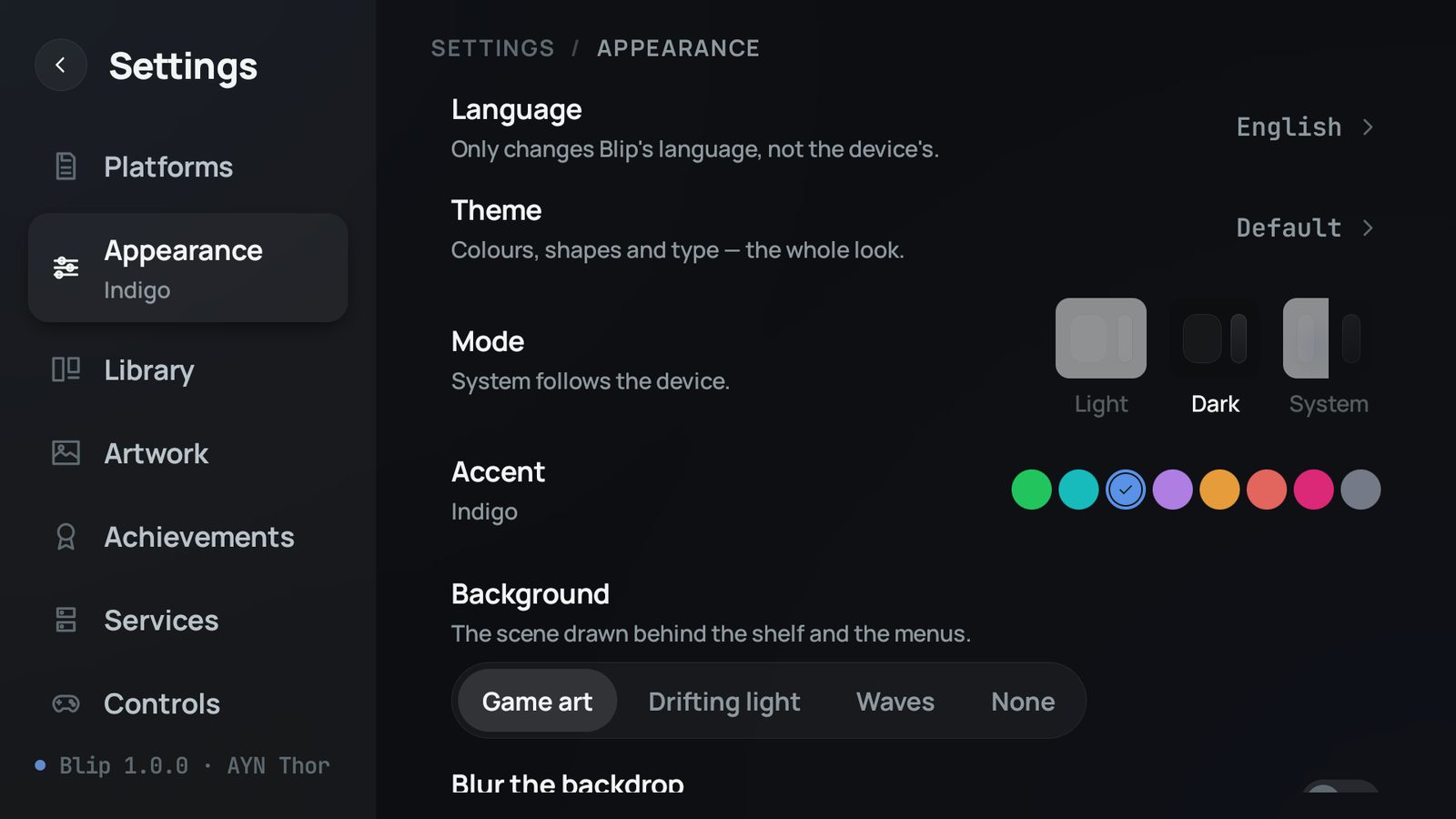
Inside whichever theme you picked: light, dark or follow the system, eight accent colours, four backgrounds — your game art, drifting light, waves or nothing — panels that let the background through or go opaque, motion full, reduced or off, and sounds you can turn down to actions only. Menu music too: the theme’s own loop or a track of your own, and never over a game.

The Appearance settings page: language, theme, light, dark or system, the eight accent colours and the four backgrounds, all on one page

RomM support · In beta

Your collection, integrated.

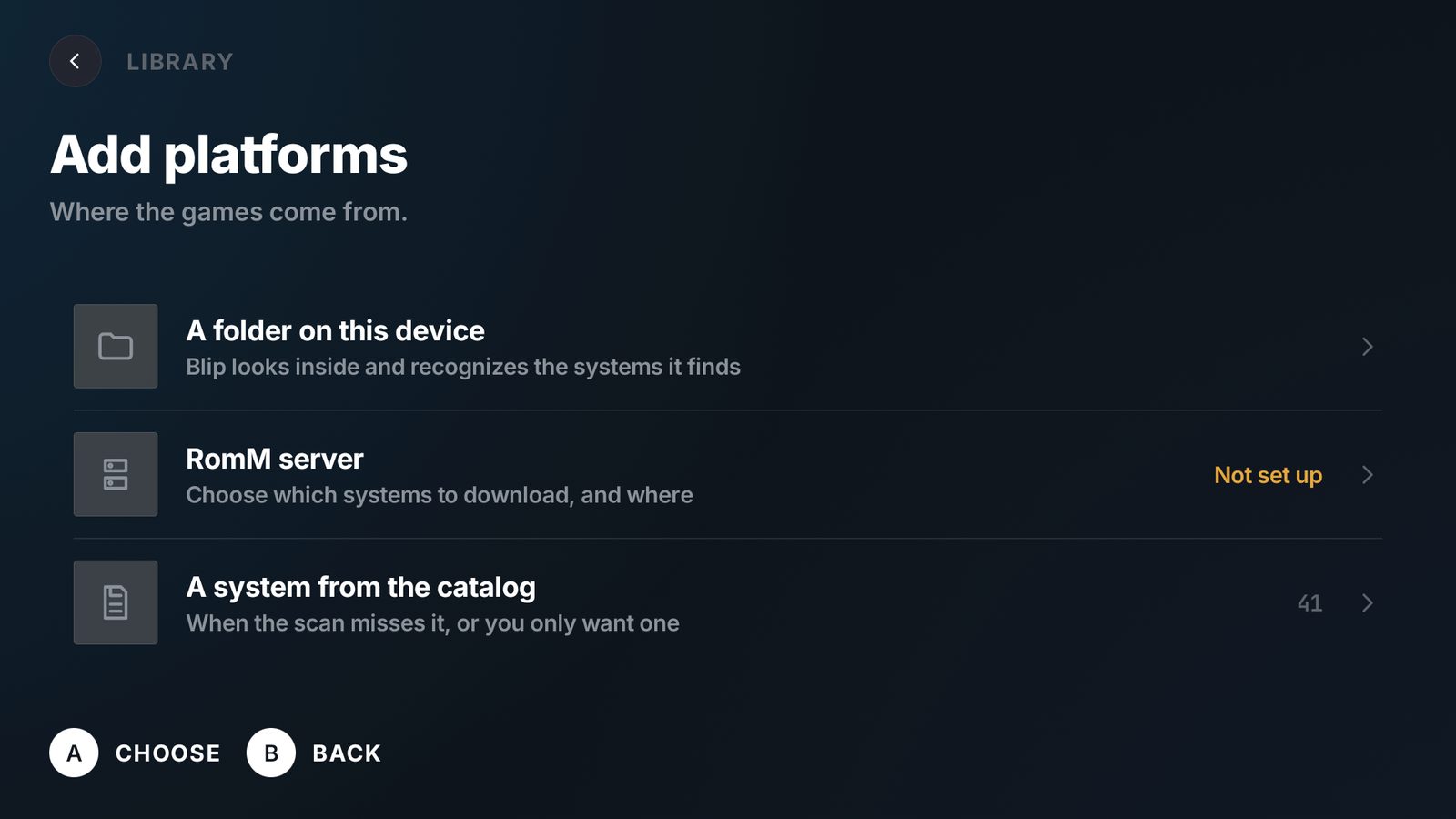
Pair a self-hosted RomM server and it joins the scan like any other folder: the whole collection on your network lands on the shelf beside the files on the device, covers and all. What you have not downloaded yet wears a cloud mark and a Download button, with progress on the cover; what you have plays straight from storage. The only thing you type on the handheld is the server address — you approve the pairing in RomM’s own web UI, so your password never touches it. An unreachable server greys its games and holds their place instead of dropping them.

It works, and it is not finished: collections, favourites and save sync are what comes next. That is why we still call it beta.

The Add platforms chooser: a folder on this device, a RomM server, or one system from the catalog of 41

Features

Built for a controller and a couch.

Where it runs

An Android launcher for the handheld you already own.

Blip is an Android app, so the shell does not matter: if the device runs Android 12 or newer it runs Blip. No root, no custom firmware, no special hardware — and it works the same on a phone or a tablet with a pad attached.

Built and tested on the AYN Thor and the Retroid Pocket — those are the two we can vouch for on every release. The dual-screen work is done on the Thor; any handheld that exposes a second display gets the same split.

Community

Blip is built with the people who use it.

The app is out, and the Discord is where it keeps moving. Come with a handheld nobody has tested yet, an emulator that needs a launch configuration, or a feature you keep wishing were there.

  • Releases land here first

    What shipped, what changed, and what is being worked on right now.

  • Bugs reach the person writing the code

    No form, no ticket queue. Say what your device did and it gets read.

  • The roadmap gets argued over

    Achievements in the companion, RomM sync, more themes — say which you want first.

FAQ

Questions people ask first.

Does it come with games?

No. This is only a launcher: it organises files you already have on your device and hands them to the emulator you picked. It never downloads game files.

Do I have to add my systems one by one?

No. Point Blip at the folder your ROMs already live in and one scan finds every system inside it, counts the games and suggests an emulator and core for each. You review the table, exclude anything you do not want and import the lot in one pass. Adding a single system by hand is still there for when you want it.

Which emulators does it work with?

Any Android app that can open a file it is handed. The bundled catalog already knows 41 systems and the apps and cores that play them, so the suggestion is usually right; you choose the app per platform, so a system can use one emulator today and a different one tomorrow without touching your library.

Where does the box art come from?

Several sources at once — libretro thumbnails, PlayMatch, TheGamesDB, IGDB, ScreenScraper and SteamGridDB — plus any images you already keep next to your games. Blip weighs the answers and takes the best one, so most libraries come out right the first time. Every source that needs no account is used by default; your own free ScreenScraper or SteamGridDB key only makes it better. Anything it gets wrong you replace from the game screen.

Which handhelds does it run on?

Any Android 12 device or newer, whatever the shell: the AYN Odin and Thor line, the Retroid Pocket line, AYANEO and Anbernic Android handhelds, and phones or tablets with a controller attached. No root, no custom firmware, no special hardware — and it can be set as the home app so the shelf is the first thing the device shows. It is built and tested on the AYN Thor and the Retroid Pocket, which are the two we can vouch for on every release.

What does it do on a dual-screen handheld?

It splits every screen by function and repeats nothing: the game you are looking at fills the top panel, the library sits under your thumb on the bottom one. Behind a running game the lower panel becomes the game companion — session time, brightness and volume, and an app drawer that opens onto the panel so the game above is never covered.

Does it work without internet?

Scanning, browsing and launching all happen on the device. A connection is only needed to fetch box art and game details, and for the services you choose to connect — RetroAchievements and your own RomM server — all of which catch up on their own whenever you have one.

What does it cost?

The app is free and carries no ads. Everything the launcher itself does — the shelf, the artwork, every theme, the second screen — is free. One purchase, once, unlocks the two features that talk to a service on your behalf: RetroAchievements and RomM.

Found a bug, or want something added?

The Discord server is where that happens. It is where releases are announced, where what is being built next gets argued over, and where a bug report reaches the person writing the code without a form in between.

Put your library on the shelf.

Free, no ads, no account — a one-time Pro unlock covers RetroAchievements and RomM. Install it, point it at your ROMs folder, and come tell us how it went.